Top 10 Influencer Marketing Platforms in the USA (2026): Features, Pricing & Best Software for Brands
- Posted On : 2026-07-29
Influencer marketing stopped being a nice-to-have years ago. US brands now run campaigns across Instagram, TikTok, and YouTube at once, often with dozens of creators, while leadership expects clear ROI. At that scale, spreadsheets and inboxes fall apart, which is why dedicated influencer marketing software is essential in 2026.
The catch is that every influencer marketing platform in USA is designed for different business needs. Some focus on AI-powered campaign management, others specialize in ecommerce attribution or enterprise reporting. This guide compares the top solutions to help brands choose the right platform for their goals.
What brands and creators want from a Influencer Marketing Software
The right influencer marketing software has to work for both brands and creators, not just the company running the campaign. Whether you're choosing an influencer marketing platform in USA or managing global creator partnerships, the platform should streamline creator discovery, outreach, campaign execution, payments, and performance tracking from one centralized workspace.
Brands want three things: faster discovery of creators who genuinely fit the audience, less manual work across outreach, briefs, and approvals, and ROI they can prove to finance. A tool that nails discovery but leaves reporting a mess still costs the team hours every week.
Creators want clarity and respect: briefs that spell out deliverables and timelines, payments that arrive on time, and collaborations matched to their niche so the content actually performs. Platforms that make creators chase invoices or decode vague briefs lose good partners quickly.
The strongest platforms close that gap. When brand and creator work from the same information, campaigns launch faster and relationships last, which is why two-sided systems are gaining ground in 2026. Keep both perspectives in mind as you read the comparison below.
What Is an Influencer Marketing Platform?
An influencer marketing platform is software that helps brands discover creators, manage collaborations, automate outreach, organize campaign workflows, process creator payments, and measure campaign performance from one centralized dashboard.
Unlike standalone creator databases, modern influencer marketing platforms also include AI-powered creator recommendations, influencer CRM, campaign automation, analytics, and ROI reporting, making them essential for brands running multiple campaigns across Instagram, TikTok, YouTube, and other social channels.
Quick comparison of Top Influencer Marketing Platform in USA, 2026
| Platform | Best for | Starting price | AI features | Creator database |
|---|---|---|---|---|
| MyWall | AI-first all-in-one workflow | Custom | Yes (Genie) | 150M+ |
| GRIN | DTC and ecommerce at scale | Custom (from ~$399/mo) | Yes (Gia) | 190M+ (reported) |
| Upfluence | Multi-store ecommerce | Custom (from ~$478/mo) | Yes (Jaice) | Millions |
| CreatorIQ | Global enterprise programs | Enterprise (from ~$36K/yr) | Yes | 30M+ |
| Modash | Discovery and vetting on a budget | From ~$199/mo | Limited | 380M+ |
| Aspire | UGC and paid or affiliate campaigns | Custom | Yes (image AI) | ~1M+ marketplace |
| Traackr | Enterprise measurement, beauty | Enterprise (from ~$20K/yr) | Limited | Large, global |
| Later Influence | Social-first marketing teams | Custom (from ~$15K/yr) | Yes | ~10M+ |
| Sprout Social | Influencer plus wider social suite | Custom/enterprise | Yes | Millions |
| Influencity | Mid-market all-in-one | Accessible tiers (custom) | Partial | 200M+ |
Pricing and database figures reflect publicly available information in 2026 and are mostly quote-based. Verify current numbers with each vendor.
1. MyWall
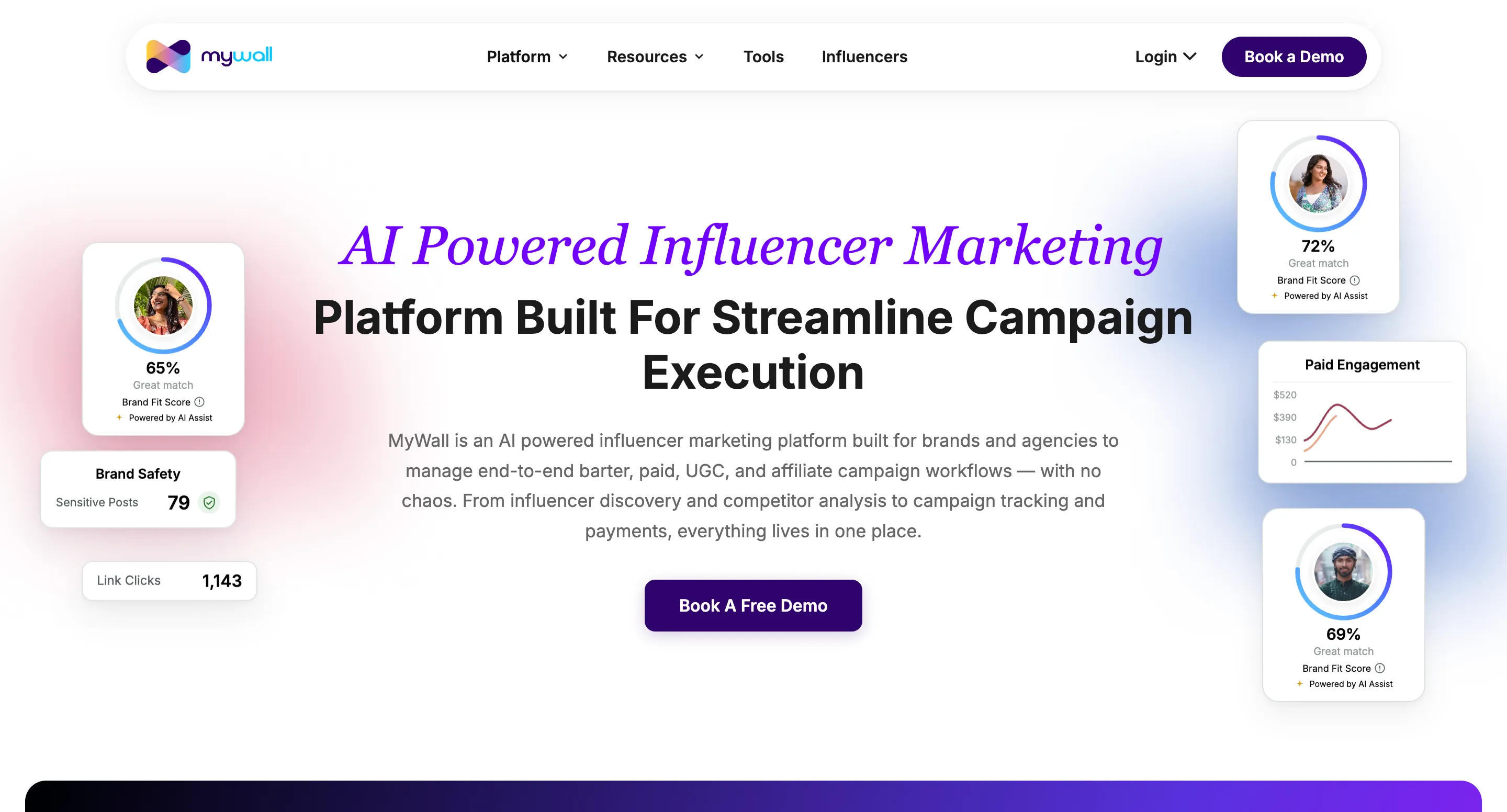
MyWall is an AI-powered influencer marketing platform that helps brands discover creators, manage campaigns, automate workflows, and measure ROI from a single platform. Its AI Creator Discovery tool enables brands to find high-fit creators using advanced audience and performance filters, while MyWall Genie delivers AI-powered competitive intelligence by revealing successful creator partnerships and content trends. Combined with AI Executives for campaign automation, real-time analytics, and a unified workspace for brands and creators, MyWall simplifies the entire influencer marketing lifecycle. For brands looking for an AI-first influencer marketing platform in 2026, it offers one of the most complete end-to-end solutions available.
Best for: brands and agencies that want creator discovery, outreach, campaign management, and real-time ROI in a single AI-first system, with a shared space that works for creators too.
Key features: a 150M+ creator network with 30+ filters (niche, engagement rate, views, and a visual content score); AI competitor analysis that reveals which creators rival brands already use; a campaign marketplace where verified creators apply with rates, timelines, and past work, ranked by fit; briefs, invites, approvals, and payouts in one dashboard with roles and audit logs; real-time ROI and analytics per creator and per campaign; Auto DM outreach; and an AI assistant, Genie, that shortlists creators and drafts messages.
Pros: genuine end-to-end workflow that replaces several separate tools; two-sided setup
Pricing: custom, based on program size, scaling from growing brands to agencies.
Why choose MyWall: if you want one modern, scalable platform that handles discovery through reporting without bolting on extra tools, MyWall is the strongest all-rounder for US brands. In one campaign for skincare brand Biodance, it activated 503 creators and drove more than 2.5 million impressions, all managed from a single dashboard.
2. GRIN
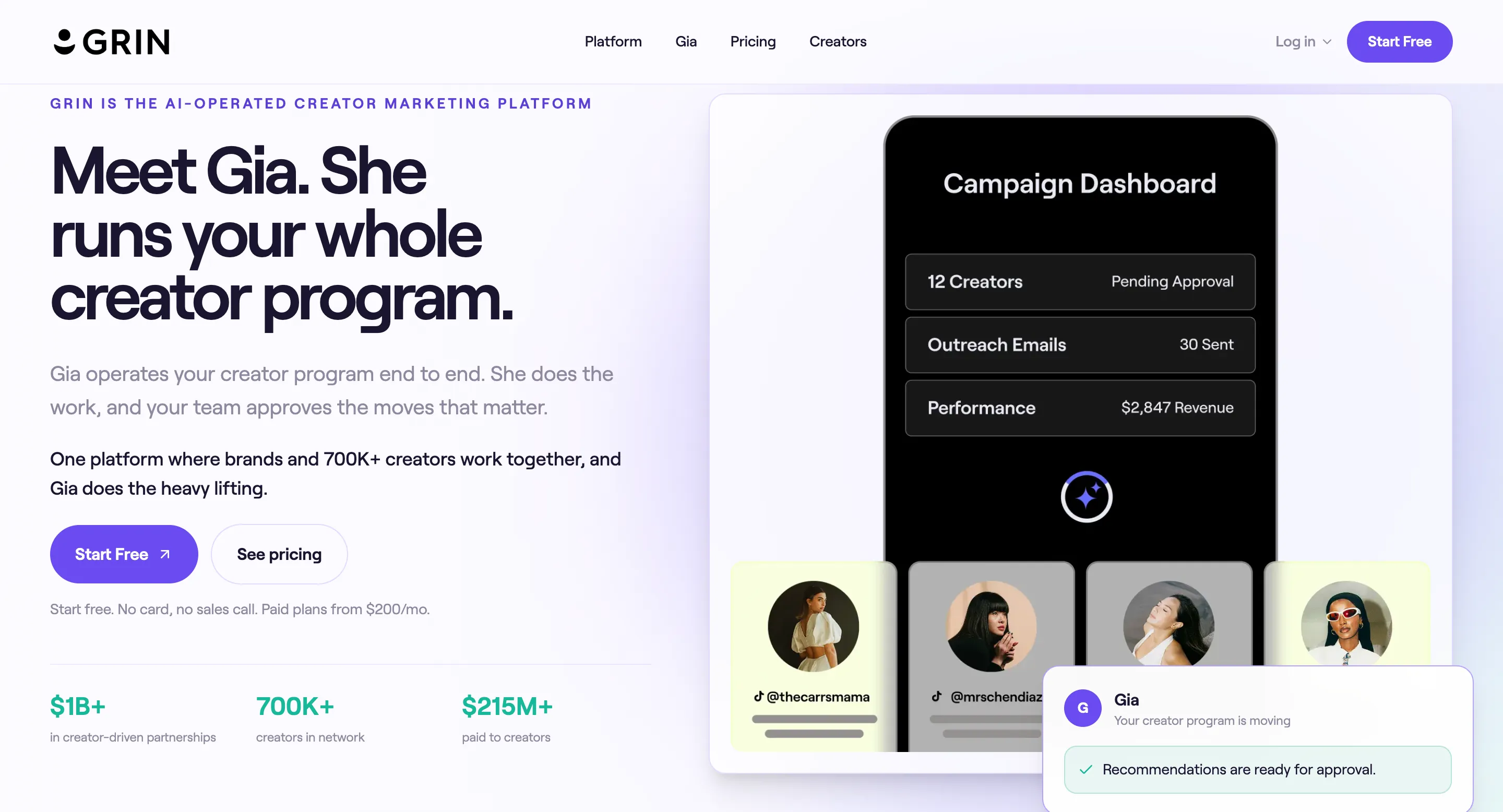
GRIN is a creator management platform built specifically for DTC and ecommerce brands that judge influencer programs on sales.
Best for: mid-to-large ecommerce brands with a dedicated influencer manager.
Key features: deep Shopify, WooCommerce, and Magento integrations, product seeding, affiliate links, discount codes, sales attribution, an integrated email inbox, creator payments, and an AI agent, Gia.
Pricing: custom; reported from around $399 per month.
Why choose it: when connecting creator posts directly to store revenue is the top priority.
3. Upfluence
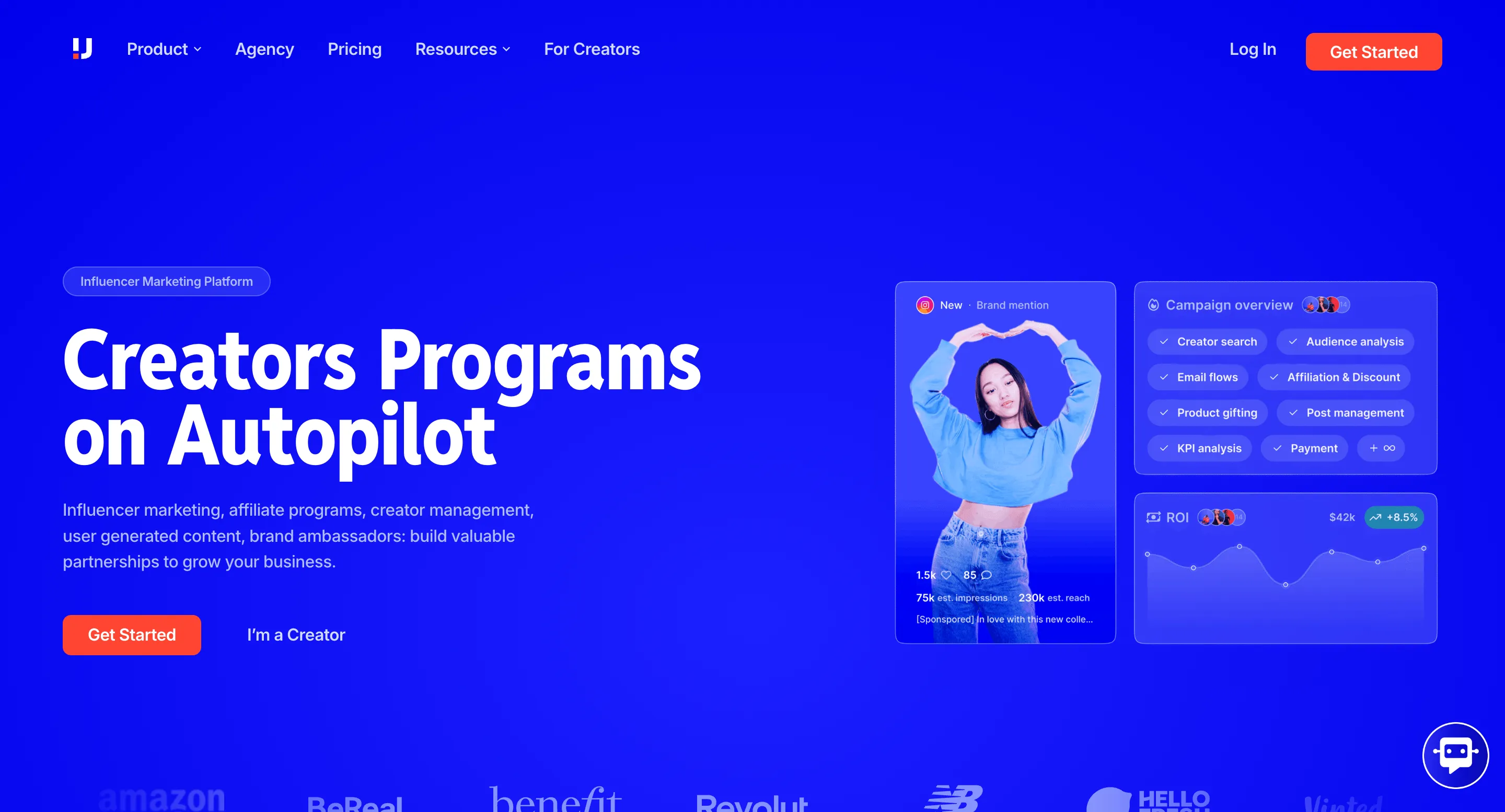
Upfluence pairs AI creator discovery with affiliate management and the widest ecommerce integrations, including native Amazon.
Best for: ecommerce brands selling across more than one storefront.
Key features: integrations with Shopify, WooCommerce, Magento, BigCommerce, and Amazon; a feature that finds creators among your own customers; revenue and commission dashboards; and an AI co-pilot, Jaice.
Pricing: custom; reported from around $478 per month, with most brands between $795 and $1,750.
Why choose it: multi-store sellers who want every creator tied to revenue.
4. CreatorIQ
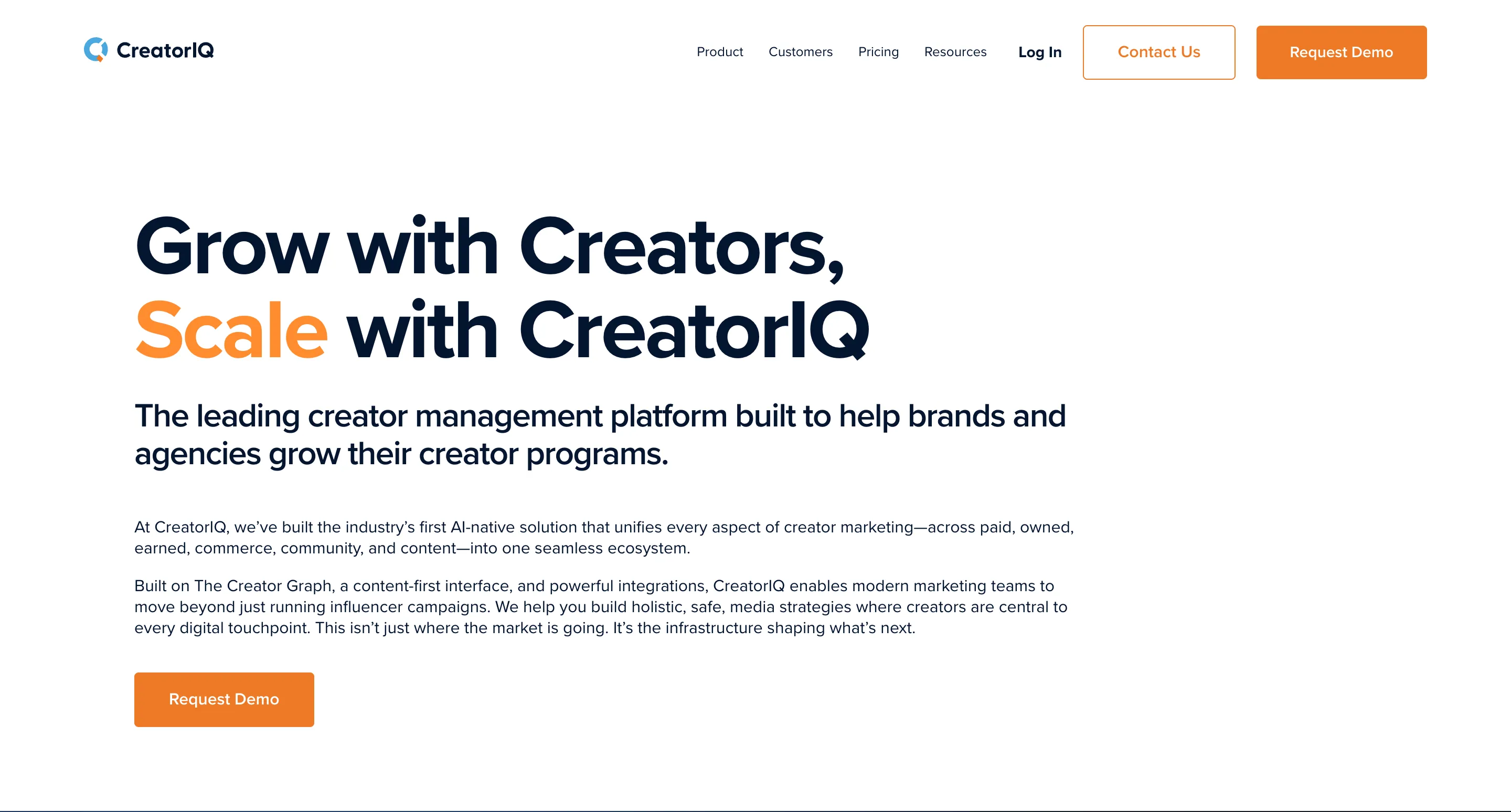
CreatorIQ is enterprise-grade software built for scale, governance, and global reporting.
Best for: Fortune 500 brands and large agencies running global programs.
Key features: AI semantic search, deep API integrations, a built-in CRM, content approvals, and tax-compliant payments across 60+ currencies.
Pricing: enterprise; reported from around $36,000 per year.
Why choose it: when scale, compliance, and standardized reporting matter most.
5. Modash
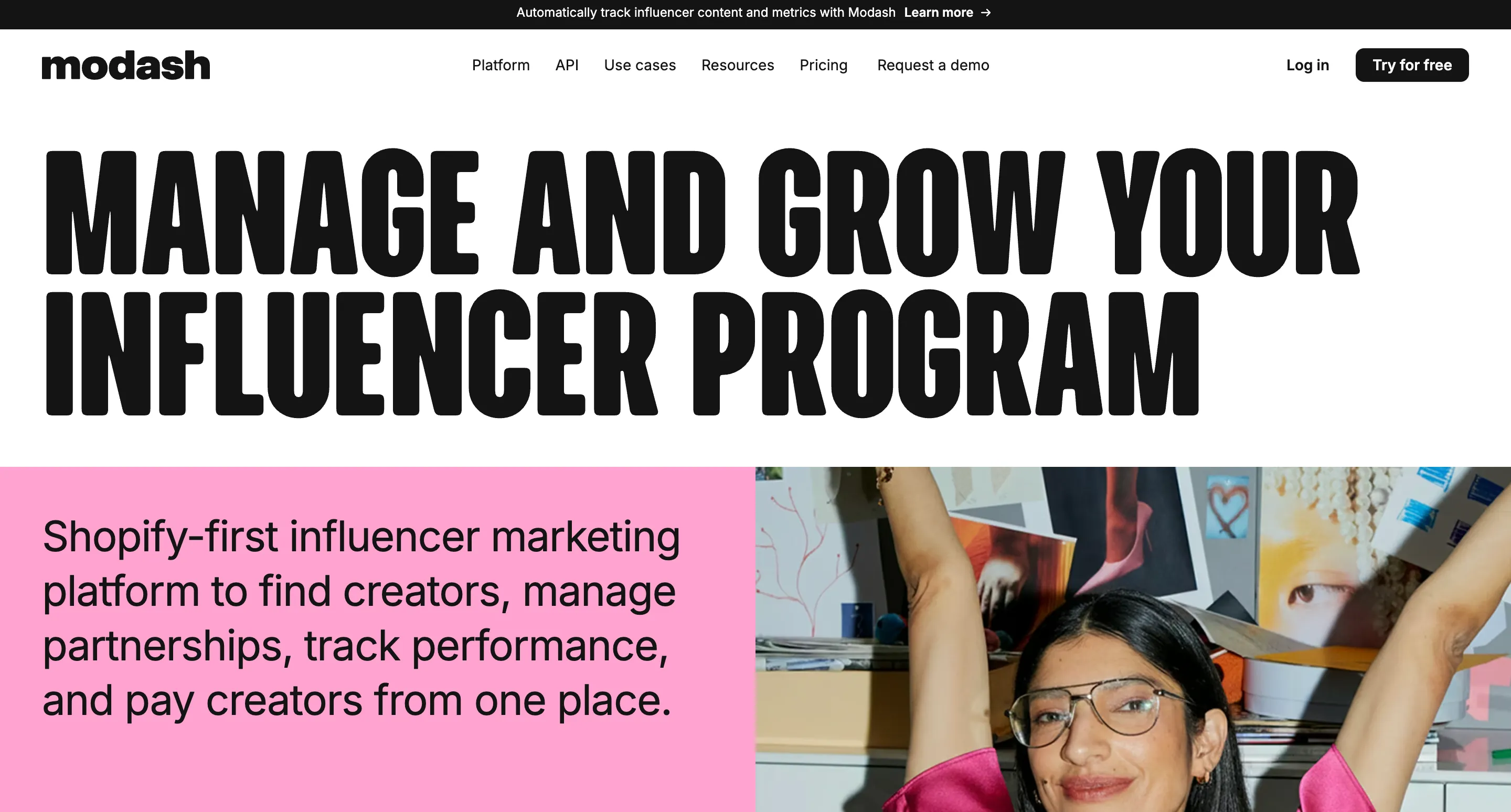
Modash is a discovery-first platform built on one of the largest creator databases in the category.
Best for: lean teams and performance marketers running high-volume micro-influencer programs.
Key features: 380M+ public profiles across Instagram, TikTok, and YouTube, city-level audience filters, fraud detection, content collection, and Shopify integration.
Pricing: reported from around $199 per month. Why choose it: fast, affordable creator discovery at scale.
6. Aspire
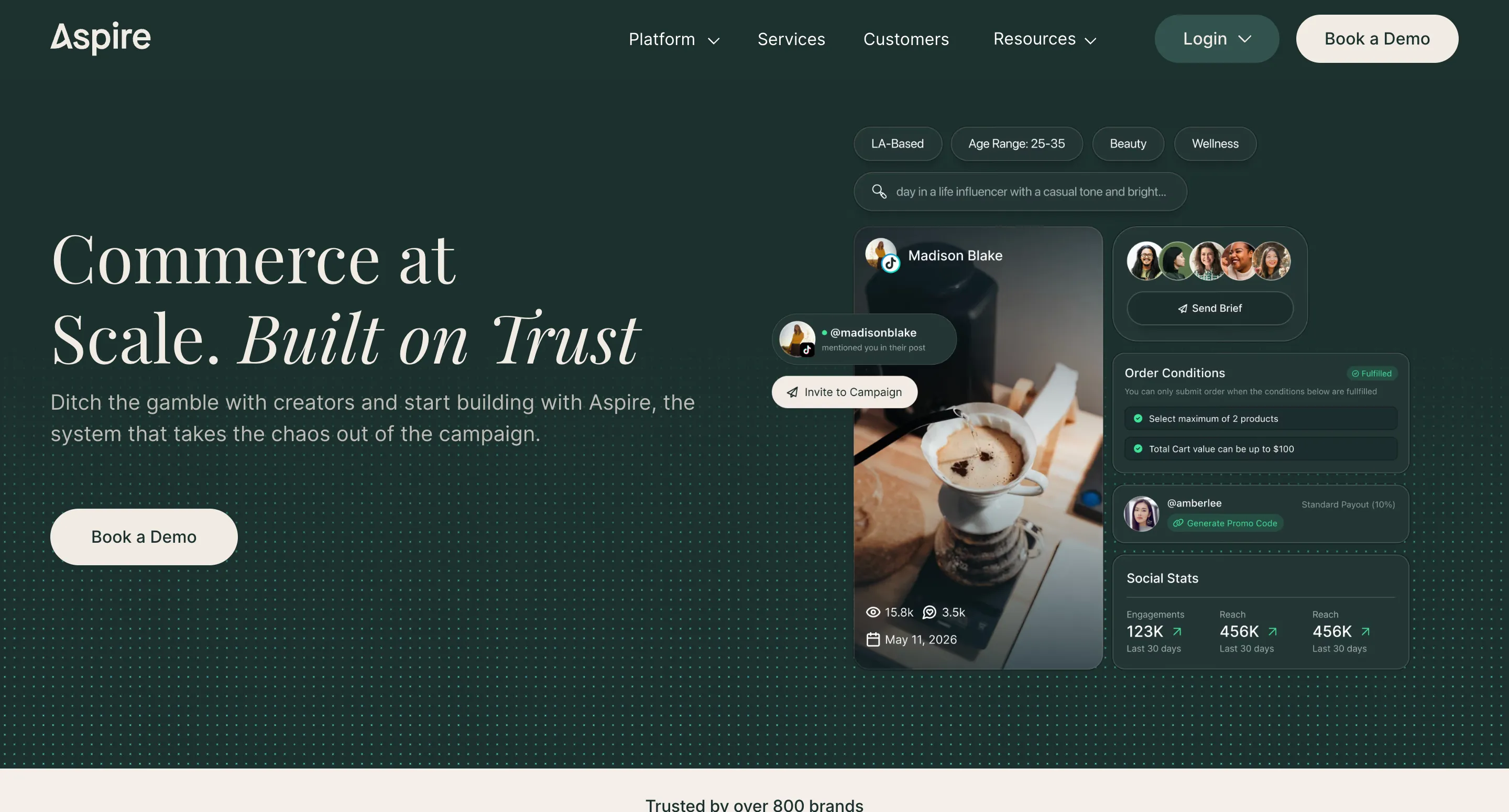
Aspire is a US-focused platform strong in influencer discovery and UGC-driven paid campaigns.
Best for: large-budget US brands running UGC, paid, and affiliate collaborations.
Key features: a creator database plus a marketplace of around one million creators, image-recognition AI to match your aesthetic, Shopify sales tracking, and optional agency services.
Pricing: custom, not publicly listed.
Why choose it: UGC and paid-media programs that need creators at volume.
7. Traackr
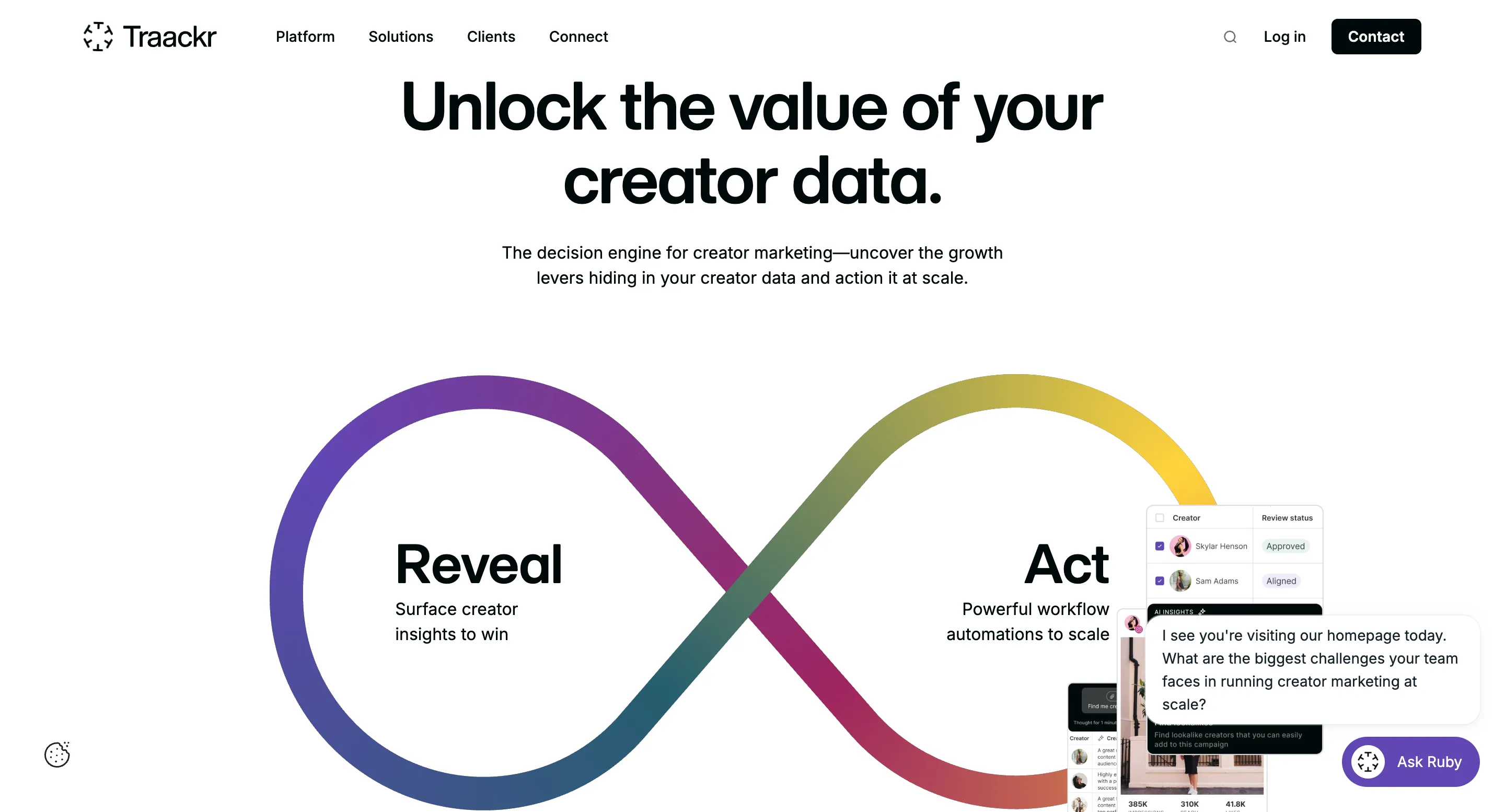
Traackr is one of the oldest platforms, built for enterprise measurement and popular with global beauty brands.
Best for: large enterprises running data-driven, compliance-heavy programs.
Key features: discovery, audience vetting, relationship management, campaign management, and custom reporting across Instagram, YouTube, TikTok, Twitch, and Snapchat, with in-platform payments.
Pricing: enterprise; reported from around $20,000 per year.
Why choose it: proving influencer ROI to stakeholders at enterprise scale.
8. Later Influence
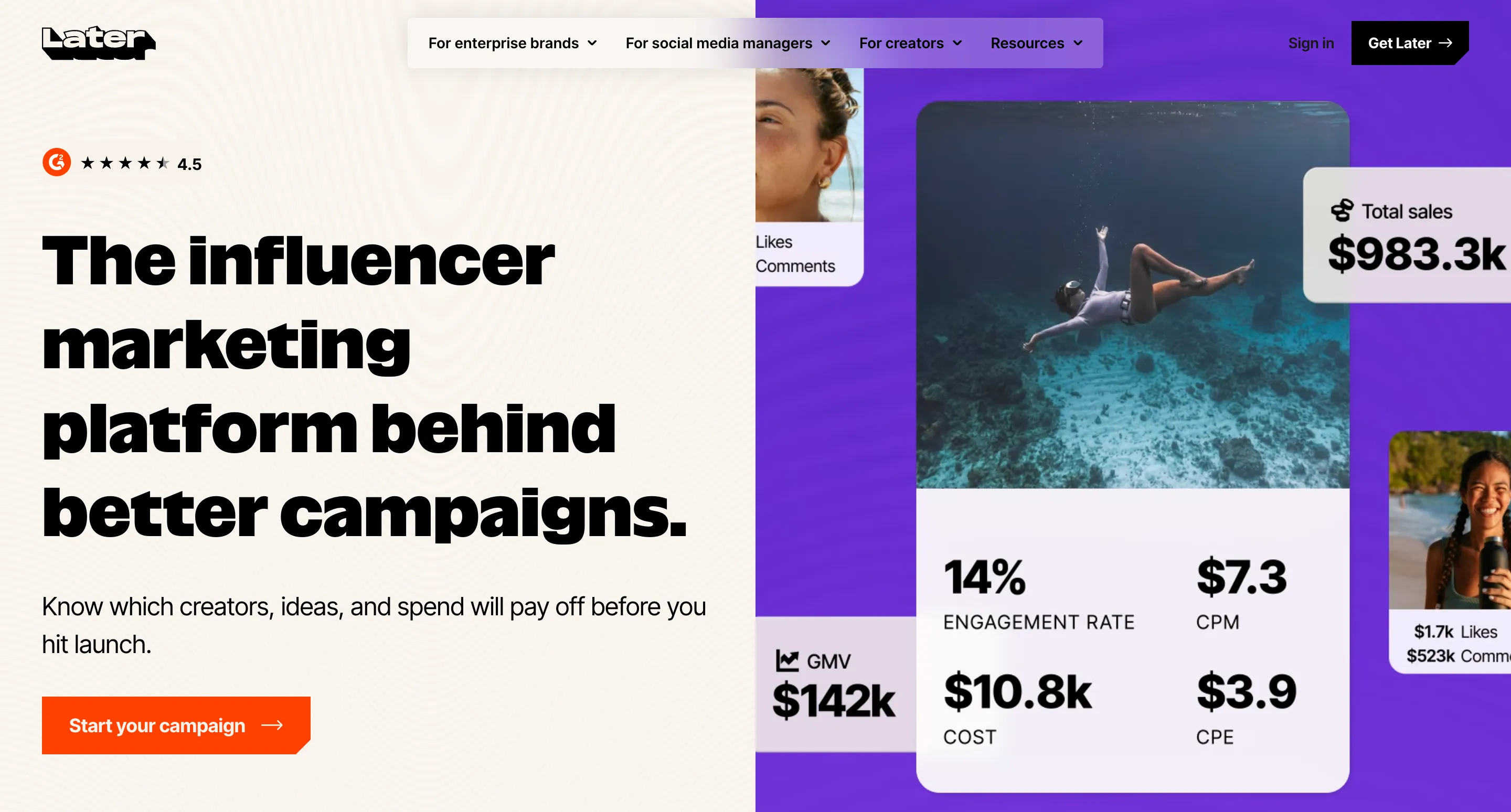
Later Influence, formerly Mavrck, is an enterprise platform now folded into Later's broader social suite.
Best for: social-first marketing teams that want influencer work tied to content scheduling.
Key features: discovery, brief and campaign management, content approvals, gifting and payments, a Mavely affiliate integration, and AI workflow automation.
Pricing: custom; reported from around $15,000 per year.
Why choose it: teams already invested in Later's social stack.
9. Sprout Social
Sprout Social offers influencer marketing inside its wider social media management suite.
Best for: enterprise teams that want influencer work connected to broader social strategy.
Key features: creator discovery and CRM, AI recommendations, campaign management, reporting, revenue attribution, and brand intelligence with EMV benchmarking.
Pricing: custom/enterprise.
Why choose it: existing Sprout users consolidating tools.
10. Influencity
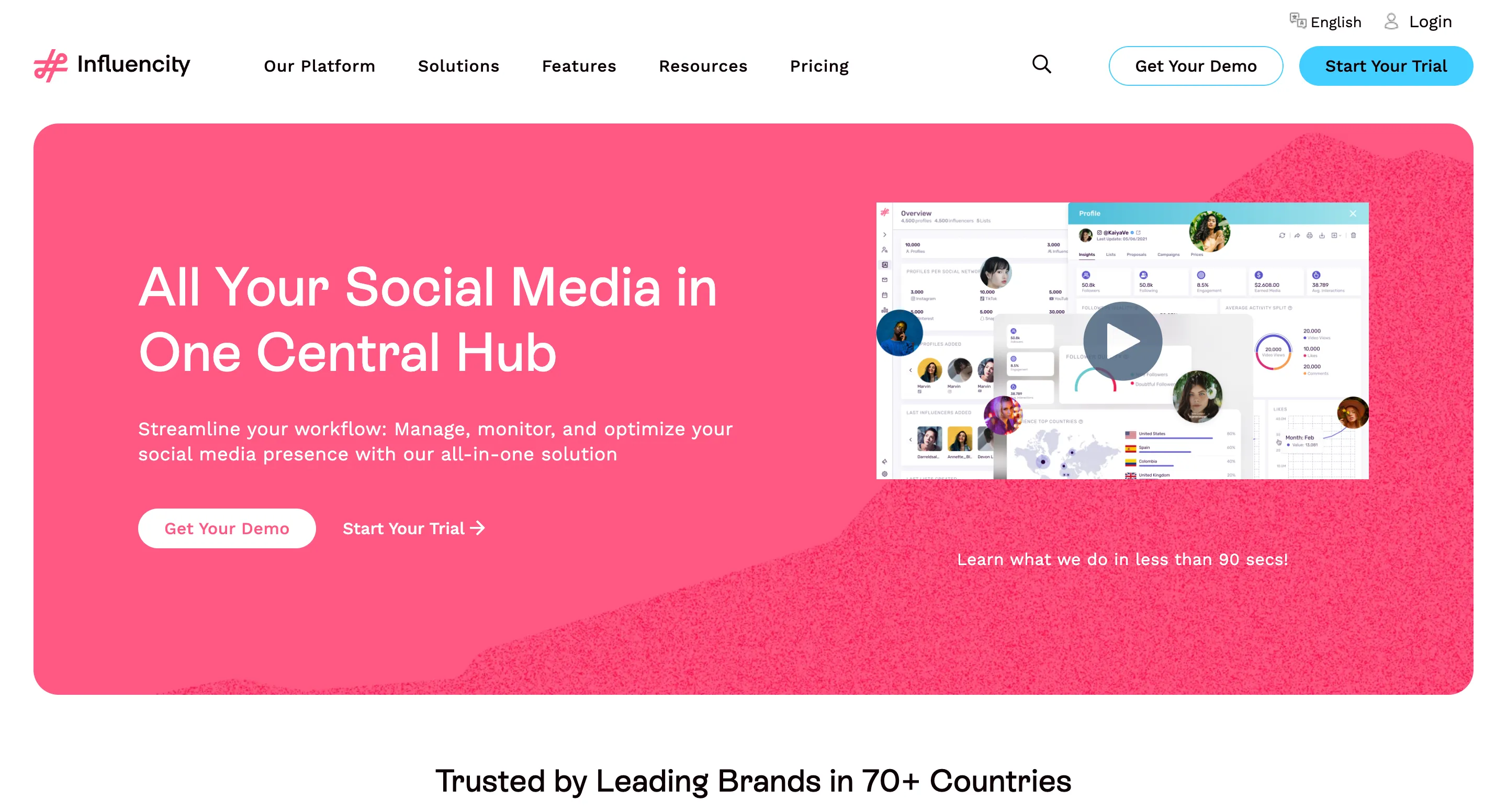
Influencity is a balanced all-in-one aimed at mid-market brands and agencies.
Best for: growing teams that want broad coverage without enterprise cost.
Key features: a large creator database, audience analysis, CRM, and campaign management in one platform.
Pricing: accessible tiers, custom by plan.
Why choose it: a practical step up from discovery-only tools.
Capability comparison
The comparison below highlights how each influencer marketing platform in USA performs across AI capabilities, creator discovery, campaign management, reporting, and ROI tracking.
| Platform | AI | Discovery | Full campaign workflow | ROI / attribution | Enterprise-ready |
|---|---|---|---|---|---|
| MyWall | Yes | Yes | Yes | Real-time, per creator | Growing |
| GRIN | Yes | Yes | Yes | Sales attribution | Yes |
| Upfluence | Yes | Yes | Yes | Revenue tracking | Yes |
| CreatorIQ | Yes | Yes | Yes | Enterprise reporting | Yes |
| Modash | Limited | Yes | Limited | Basic | Partial |
| Aspire | Yes | Yes | Partial | Shopify tracking | Yes |
| Traackr | Limited | Yes | Yes | Deep measurement | Yes |
| Later Influence | Yes | Yes | Yes | Reporting | Yes |
| Sprout Social | Yes | Yes | Yes | Attribution | Yes |
| Influencity | Partial | Yes | Yes | Basic | Partial |
How to choose the right influencer marketing Software in USA
Choosing the right influencer marketing platform in USA depends on your business size, campaign goals, creator relationships, and reporting requirements. Match the platform to your workflow instead of choosing solely based on features.
- Budget and business size. Enterprise tools like CreatorIQ and Traackr rarely make sense until your influencer budget passes roughly $10,000 a month.
- Campaign volume. Occasional campaigns need less workflow than always-on programs.
- Creator database and vetting. Check size, filter depth, and fraud detection.
- Integrations. Confirm it connects to your store and marketing stack.
- AI and automation. Look for features that save real hours, such as discovery and reporting.
- Reporting and ROI. It must track the metrics your leadership asks about.
Common buying mistakes to avoid: choosing on database size alone, ignoring reporting until launch, and locking into a long annual contract before testing the workflow.
Who should use which platform?
- Startups and lean teams: Modash or Influencity for value; MyWall to grow into full campaigns.
- DTC and Shopify brands: GRIN or Upfluence for store attribution; MyWall for an all-in-one workflow.
- Amazon and multi-store sellers: Upfluence for its native Amazon integration.
- Agencies and creator-heavy teams: MyWall for managing many campaigns and stakeholders at once.
- Global enterprises: CreatorIQ or Traackr for scale, compliance, and benchmarking.
Conclusion
In the End, we can conclude that there is no single best influencer marketing platform in USA for every brand. The right choice depends on your campaign goals, team size, budget, and reporting needs. GRIN and Upfluence excel in ecommerce attribution, CreatorIQ and Traackr lead in enterprise measurement, while Modash stands out for creator discovery. For brands looking for an AI-first, end-to-end solution, MyWall combines creator discovery, campaign management, AI automation, and real-time ROI tracking in one unified platform.